May 2026 Briefs

Serendipity
I recently had the privilege to spend the day with the Florida Alliance for Healthcare Value at their annual meeting in Winter Park, FL. President and CEO Karen van Caulil and her team crafted a cohesive agenda of employers demonstrating innovative strategies in women’s health, mental health, brain health, lifestyle medicine, musculoskeletal benefits, pharmacy management and precision medicine. I was proud to present what HERO is doing in brain health alongside lifestyle medicine physician Dr. Arianna Becker.
It was also serendipity. The location for this meeting was the Center for Health and Wellbeing, which was born from collaboration between the Winter Park Health Foundation and AdventHealth. This state-of-the-art facility will host the HERO Think Tank on the role of nature in workforce well-being on November 9th, and the HERO Healthcare Summit on November 10th. A delightful discovery for our Fall meetings!
These two convenings will follow the HERO CMO Summit on November 8th in Orlando, FL. This invitation-only Summit will convene chief medical officers and corporate medical directors around the theme of lifestyle medicine for better brain health, building on the multi-year HERO initiative funded by Ardmore Institute of Health (AIH). The Summit will be offered as a pre-conference meeting immediately preceding will immediately precede the ACLM annual conference at the Rosen Shingle Creek, and is sponsored by Pfizer and AIH/Full Plate Living. We will also award the first Dexter Shurney, MD Well-being Fellowship at the Summit.
Start planning now to join us in Florida in November!
Together,
Karen
 In Memory
Theresa “Terri” Stone, MD, FACP, DipABLM, FACLM
May 11, 2026
Dr. Terri Stone was a passionate champion of lifestyle medicine and a driving force in advancing the field, including her leadership of the Fresh & Savory Culinary Medicine Program at MedStar. Her work brought whole-person, evidence-based care to life in meaningful, accessible ways. Dr. Stone was also important at the start of HERO’s work in lifestyle as medicine for employers, serving as a member of the Advisory Board. A former ACLM Board Member and Fellow, Dr. Stone was also the founding co-chair of the ACLM Health Equity Achieved through Lifestyle Medicine (HEAL) Initiative. We extend our heartfelt condolences to her family, friends, and colleagues.
Member Updates
HERO Events
Summer Think Tank
A virtual, HERO members-only convening
July 15, 2026
Financial Well-being at Work:
Are We Solving the Right Problems?
More than two-thirds of employees say financial stress is undermining their work and personal lives — and the cost to employers is real, whether they act or not. The World Health Organization estimates the mental health toll of financial stress alone runs $1 trillion annually in lost productivity. Financially stressed workers are also significantly more likely to be job hunting than their less-stressed peers.
The pressure to act has never been greater. Nearly nine in ten U.S. adults reported some form of financial stress at the start of 2026, and employer concern has hit a new high — 48% now rate their concern at 9 or 10 on a 10-point scale, up from just 22% in 2019. Yet many employers find themselves stuck: programs exist, but utilization is low and the business case is hard to build.
HERO’s July Think Tank takes on a fundamental question: Are we solving the right problems, and for the right people? In this focused, evidence-driven conversation, we’ll explore who financial well-being programs are actually designed for, why so many employees don’t use what’s available to them, and what meaningful measurement really looks like beyond utilization rates.
Participants will leave with practical frameworks for building a business case under uncertainty, approaches for reaching employees who most need support, and strategies for integrating programs that too often sit in silos across departments and vendors.
| Register Now |
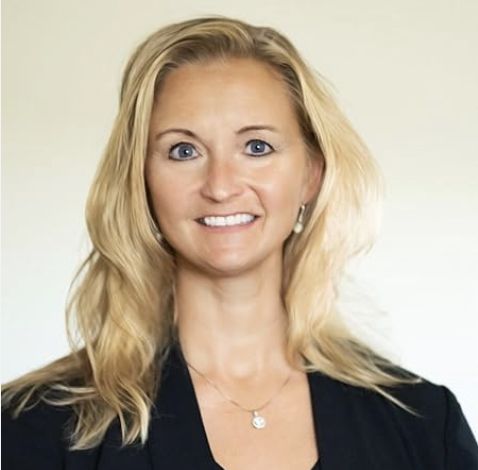
Think Tank Chair: Jessica Grossmeier, PhD, HERO Senior Fellow – Education
HERO University Summit
Navigating Institutional Changes. Communicating the value of well-being to leaders.
October 21, 2026 | A virtual convening
The HERO University Summit invites higher education leaders, well-being professionals, and researchers to submit proposals for 8‑minute presentations to be featured in one of two interactive panels at the October 20 Summit.
This year’s Summit focuses on strengthening the strategic value and long‑term sustainability of well‑being initiatives in higher education—particularly in times of leadership, organizational, and cultural change.
Selected presenters will deliver a brief, high‑impact presentation followed by facilitated panel discussion designed to maximize shared learning and practical application.
The submission portal will close July 6 at end of day and notifications will be sent to all who have submitted an entry by August 14.
Panel 1: Making Well‑Being Matter to Leadership
The Art of Storytelling and Data‑Driven Influence
Panel Focus
This panel explores how well‑being professionals translate human impact into executive‑level value. Proposals should highlight approaches that combine storytelling, data, and benchmarking to influence leaders and embed well‑being into institutional decision‑making.
We invite proposals that address one or more of the following:
- Translating well‑being into leadership‑relevant outcomes (e.g., retention, engagement, performance, risk, culture).
- Using storytelling techniques, including persona‑based or narrative approaches, to connect individual experiences to institutional priorities.
- Leveraging data, benchmarks, and tools (such as the HERO Health and Well-being Best Practices Scorecard in Collaboration with Mercer(c)) to establish credibility and guide strategic direction.
- Aligning well‑being metrics with broader university KPIs for executive reporting and planning.
- Lessons learned from successfully securing leadership buy‑in during periods of institutional or leadership transition.
Ideal proposal types:
- Case examples demonstrating executive influence
- Frameworks or models for communicating value
- Practical tools for leadership engagement and reporting
Panel 2: From Strategy to Sustainability
Designing Well‑Being Initiatives That Endure Change
Panel Focus
This panel spotlights practical, forward‑looking strategies that rebuild, adapt, and advance well‑being initiatives amid institutional change. Proposals should focus on implementation, sustainability, and scalability.
We invite proposals that address one or more of the following:
- Designing sustainable well‑being strategies that survive leadership or organizational transitions.
- Applying assessment tools (e.g., HERO Scorecard) to define maturity, benchmarks, and measurable goals.
- Aligning well‑being initiatives with institutional strategy, resources, and governance structures.
- Ethical and practical applications of AI to enhance well‑being programming, evaluation, or communication.
- Strategies for rebuilding trust, engagement, and momentum following disruption or leadership change.
Ideal proposal types:
- Implementation roadmaps or playbooks
- Strategy case studies with clear outcomes
- Innovative program or policy designs grounded in evidence
Shared Learning Outcomes Across Panels
Participants will leave with:
- Practical approaches to demonstrate the institutional value of well‑being.
- Tools to align well‑being with executive priorities and KPIs.
- Strategies to sustain and advance well‑being through ongoing institutional change.
To submit, please click here.
With support from

SAVE THE DATES
HERO Chief Medical Officer Summit
November 8, 2026
Orlando, FL
With support from

HERO Fall Think Tank
November 9, 2026
Winter Park, FL
HERO Chief Well-Being Officer Summit
December 3, 2026
Clemson, SC
Interested in sponsoring? Take a look at the 2026 Sponsor Prospectus.
An additional opportunity for university well-being executive leaders:
The American College Health Association is currently seeking well-being/wellness executive leaders in higher education to participate in a national survey study. The purpose of the study is to explore and define the emerging role of Well-Being/Wellness Executives within higher education institutions.
If you choose to participate, you will be asked to complete a survey. This will take approximately 15 to 30 min. You have the option to provide your contact information to be entered into a raffle of five $100 Amazon gift cards.
You are eligible to participate if you are currently employed as an executive leader of wellness or well-being (e.g., VP/VC, AVP/AVC, Chief Wellness Officer, Dean, Executive Director) at an accredited institution of higher education in the United States.
Access the informed consent form and survey using this link: https://elon.co1.qualtrics.com/jfe/form/SV_3VnQYiIFu8ZnTQa
This study was approved by the Institutional Review Board of Elon University, Elon, NC (IRB ID: 26-3501).
Member Updates
Webinars
You can always find recordings of the most recent HERO webinars in the Archives!
From Awareness to Action: Pairing Smarter Messaging with Social Connection to Drive Physical Activity
June 3, 2026 12:00 pm Central | Register
Guest Panelists:
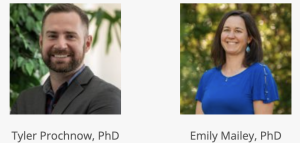
Most workplace physical activity programs focus on what to offer. The real opportunity is in how you talk about it and who you build it around. This webinar gives wellness professionals and organizational leaders a practical framework for two of the most underutilized drivers of physical activity at work: messaging and social connection. You’ll learn why reframing movement around immediate benefits (e.g., energy, mood, stress relief, belonging) outperforms traditional health-risk messaging, and how strategically leveraging workplace social networks transforms physical activity from a solo obligation into a shared experience. The result is programming that doesn’t just move people physically, but strengthens the relational fabric of your organization. Walk away with actionable strategies you can apply immediately.
Learning objectives:
- Identify evidence-based communication strategies that reframe physical activity around immediate benefits to increase motivation and engagement.
- Describe how social networks, peer support, and social connection function as practical levers for physical activity promotion and organizational belonging.
HOST: Paul Terry, PhD, Senior Fellow at HERO
HERO Members
The latest issue of American Journal of Health Promotion is now available online to HERO members.
Log in to the HERO Hub and check it out!
Open Access
Knowing Well, Being Well: Well-Being Born of Understanding
In the July 2020 issue of American Journal of Health Promotion, Dr. Paul Terry introduced a new open-access section, Knowing Well, Being Well (KWBW). In Paul’s words: “Knowing Well, Being Well” will chart a course to explore how knowledge, supportive environments, and purposeful living contribute to health, happiness, and life satisfaction.
Drs. Sara Johnson and David Katz were named as the first co-editors of this new feature, and Drs. Jessica Grossmeier and Rachel Henke have also served in that capacity. More recently, Dr. Mary Imboden and Karen Moseley have shared the role and will be joined now by Dr. Emily Stiehl, clinical associate professor specializing in health policy and administration at University of Illinois Chicago.
Guest editors expand the reach and knowledge of KWBW. Dr. Sara Johnson led the most recent issue on the role of the employer in advancing lifestyle as medicine. She was joined by HERO members 3M (Dr. Gerardo Durand) and Metro Nashville Public Schools (Dr. Martha Shepherd) who led the initiatives that were the focus of the grant funded by Ardmore Institute of Health. Link to the full articles and strategic planning tool:
- Johnson & Mauriello: https://journals.sagepub.com/doi/full/10.1177/08901171261439071
- Shepherd et al: https://journals.sagepub.com/doi/full/10.1177/08901171261439072
- Strategic planning tool: https://journals.sagepub.com/doi/abs/10.1177/08901171261445190
HERO Committees
The two workstreams from the Research Study Subcommittee are each developing articles for Knowing Well, Being Well. Watch for upcoming issues on belonging and value on investment, authored by committee members.
Committee participation is a benefit of HERO membership. If you are interested in learning more or signing up for any of the 2026 committees, please contact Karen.Moseley@hero-health.org.
HERO Worker Well-being Clearinghouse
Did you know?
The NIOSH Worker Well-Being Questionnaire (WellBQ) is a tool to help employers, researchers, well-being professionals, and others assess the well-being of a workforce and identify opportunities for improvement and areas of success in worker well-being. The NIOSH WellBQ is free for public use. It has 68 items and takes about 15 minutes to complete. You can download the PDF from the NIOSH WellBQ webpage or contact the HERO Worker Well-Being Clearinghouse to get a link to administer the survey electronically.
How to use
- Start by using the instrument to get a baseline measure of worker well-being and administer it periodically to identify changes.
- It may be especially valuable when used together with other metrics such as organizational data about turnover, injury rates, or healthcare costs. Results can be compared with other workforces like other teams or other sites.
- Ensure that privacy is protected so that workers feel comfortable answering honestly.
- After analyzing the results, share them with workers and collaborate to create action steps addressing priority areas.
The HERO Worker Well-Being Clearinghouse
The HERO Worker Well-Being Clearinghouse is an open-source database that houses de-identified data from use of the NIOSH WellBQ. Organizations and researchers can share anonymous results with the Clearinghouse. Employers, researchers, and others can use accumulated data for benchmarking and analyzing trends.
Recently published research from UNC features the NIOSH WellBQ: Exploring Well-Being Disparities: A Comparative Analysis of Urban and Rural Clinicians Using the NIOSH Worker Well-Being Questionnaire
HERO RECOMMENDS
Resources and Readings
Recommended Resources
On financial well-being
PwC’s 2026 Employee Financial Wellness Survey (April 2026). PwC’s 2026 Employee Financial Wellness Survey of nearly 3,500 US employees finds that financial stress is a business risk hiding in plain sight, with 59% of employees reporting that current financial stress is undermining productivity, engagement, and workforce stability. The strain is particularly acute among Gen X workers, where only 38% are confident they can retire when they want to, and more than half of all respondents say they may need to draw on retirement savings early — creating workforce planning and organizational stability challenges that go well beyond personal finance.
On brain health
Future Studies: A Scientific Statement From the American Heart Association (June 2026). This AHA scientific statement is important for HERO members because it reframes brain health as a workforce issue, not just a late-life medical one — showing that factors employers can influence right now, particularly chronic stress and poor sleep, are actively reshaping workers’ brain structure and long-term cognitive health. For organizations already focused on brain health, this paper provides scientific grounding for connecting mental health and sleep programs to something much bigger than productivity: the protection of cognitive function across an employee’s entire working life.
On lifestyle
Minimum combined sleep, physical activity, and nutrition variations associated with lifeSPAN and healthSPAN improvements: a population cohort study (February 2026). This article in The Lancet by Koemel et al. underscores the power of combining tiny improvements in lifestyle behaviors. Minimal lifestyle changes (e.g., adding 5 minutes of sleep, 2 minutes of moderate activity, and half a serving of vegetables daily) can add a year to your life. And this article by Lisa O’Mary summarizes the study.
On AI
Navigating the Human Side of AI-Enabled Work. From future of work to future of workers: Addressing asymptomatic AI harms for dignified human-AI interaction. arXiv. Ehsan, U. et al. (January 2026). AI’s potential to reduce administrative burden, improve efficiency, support decision-making, and create more personalized and flexible work experiences should be balanced by attention to the human experience of work during AI-enabled transformation.
This paper highlights several emerging dynamics shaping workforce well-being, including:
- the need to preserve human judgment and creativity,
- the importance of maintaining connection, meaning, and autonomy at work,
- growing demands for adaptability and continuous learning, and
- the risk of cognitive overload and overdependence on technology if change is not managed thoughtfully.
While the paper does not position AI as inherently harmful or inherently beneficial, it argues that outcomes will largely depend on how organizations design work, support employees, develop leaders, and intentionally integrate well-being into transformation efforts. For well-being and business leaders, the paper reinforces a critical shift. Workforce well-being is becoming less about isolated wellness programs and more about shaping healthy, sustainable, high-performing work systems in a rapidly evolving world. Organizations that successfully balance innovation with human-centered leadership may be best positioned to build resilient cultures, strengthen trust, and sustain performance over time. As AI transforms the workplace, this paper explores how organizations can navigate the future of work in ways that drive stronger business outcomes while elevating the human experience.
On mental health and suicide
Exploring the evidence on work-related suicide: a scoping review of a decade of research (2014–2024) (March 2026). Belli et al. point out the main risk factors associated with work-related suicides in order to solicit worldwide preventive interventions.
On work design
International Labour Organization (ILO) Report on Psychosocial Risks at Work: The psychosocial working environment: Global developments and pathways for action (April 2026). This report examines how the psychosocial working environment is shaped by elements of work and interactions at work related to how jobs are designed, how work is organized and managed, and the broader policies, practices and procedures that govern work.
Prevention, not perks: IOSH urges employers | IOSH February 2026). U.K.-based Institution of Occupational Safety and Health (IOSH) issues a warning to employers: stop papering over cracks with well-being perks and start confronting the root causes of harm affecting workforces.
2026 Global Human Capital Trends | Deloitte Insights. Insights on where organizations should focus in order to be agile and human-centered.
